
.svg)
Summary
Magnet fishing is generally safe when you use suitable equipment, protect your hands, and follow basic precautions. Use a Magnetar fishing magnet with a strong magnet fishing rope and protective gloves, secure the rope before every throw, and preferably go with another person.
Never touch, move, inspect, or transport ammunition, a suspected explosive, or an unfamiliar weapon. Keep people away from the area and call 911 when there is an immediate danger.
Every throw of a fishing magnet can reveal something unexpected, from old tools and bicycles to pieces of scrap metal. That uncertainty is part of the adventure, but it also raises an important question: is magnet fishing dangerous?
Serious incidents are not a normal part of magnet fishing. However, strong magnets, sharp finds, deep or fast-moving water, and potentially hazardous objects all require a sensible approach. This guide explains the main risks and how to manage them.
Is magnet fishing dangerous under normal conditions?
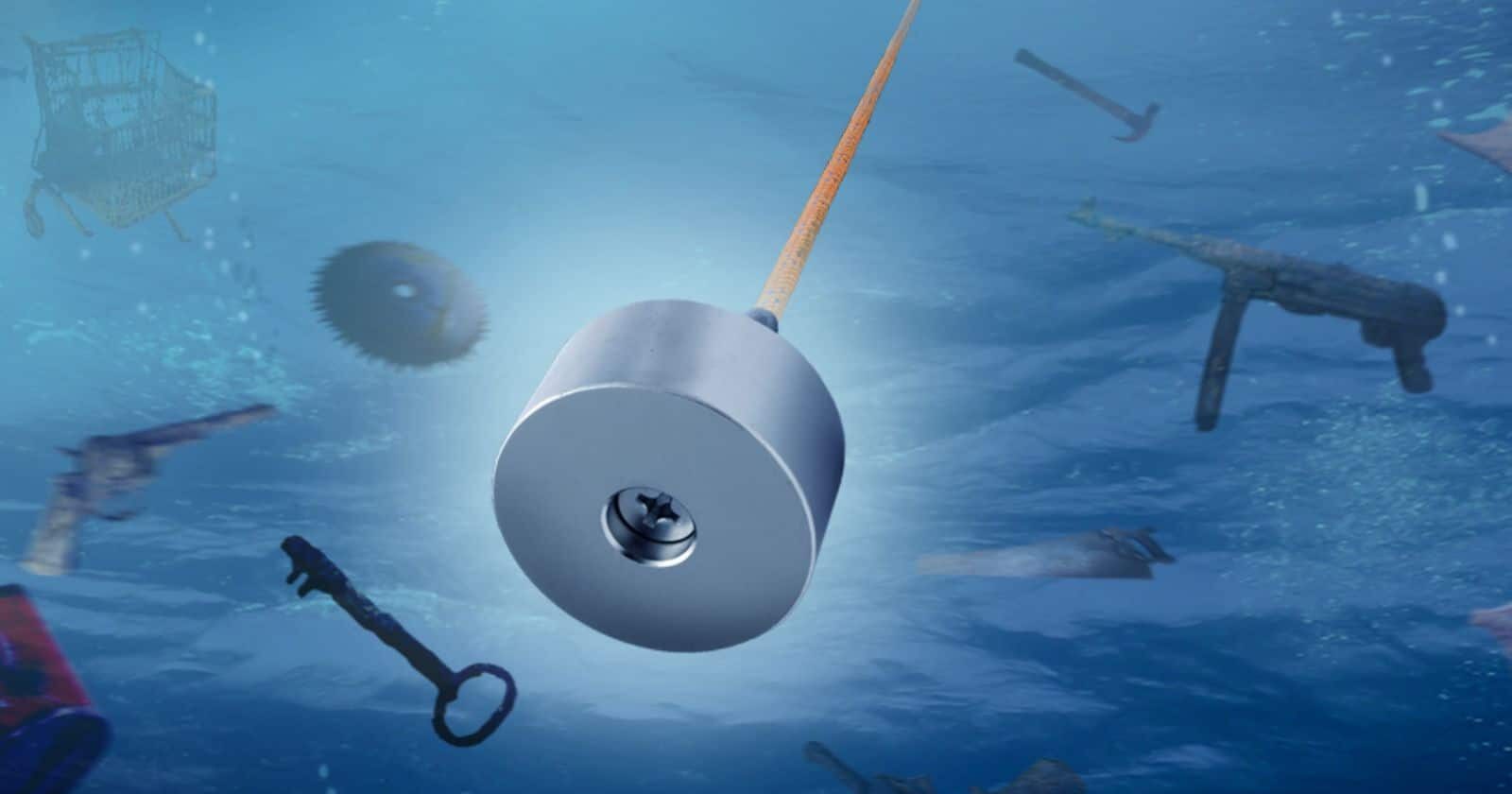
For most people, magnet fishing is a low-risk outdoor activity when it is done responsibly. Typical finds include nails, tools, shopping carts, fishing equipment, bicycles, and other discarded metal.
The activity becomes more hazardous when someone uses unsuitable equipment, stands too close to traffic or an unstable bank, handles rusty metal without gloves, or tries to examine a suspicious object.
Magnet fishing can offer several positive experiences:
- Adventure: You do not know what the next throw will uncover.
- Learning: Finds can teach you about metals, local industry, and history.
- Cleanup: Removing ordinary scrap can help leave a waterway cleaner, provided you dispose of it properly.
- Time outdoors: It can be an enjoyable activity with friends and family.
Safety depends less on the hobby itself than on your location, preparation, equipment, and decisions after making a find.
In this video, Reinout shares the founding story of Magnetar, which he started 12 years ago out of frustration with weak fishing magnets that promised high pulling power but failed to deliver. He describes how he designed his first high-distance magnet in his parents’ shed and collaborated with a university to improve their quality. Today, Magnetar magnets are made of 100% neodymium, and the company was the first to pioneer the innovative 360° fishing magnet.
Reinout discusses the crucial safety protocol of calling the police when pulling up dangerous items like weapons, knives, or ammunition while magnet fishing. He explains that these objects can contain vital DNA evidence that could assist with active police investigations. To preserve this evidence, he advises viewers never to take these items home, but to safely lower them back into the water and immediately contact the authorities.
In this quick guide, Reinout lists the five essential items required for a successful magnet fishing setup. These must-haves include a strong rope, waterproof protective gloves, a grappling hook for non-magnetic debris, a magnetic fishing pole to reach deeper spots, and a secure storage case to transport the powerful equipment. He concludes the video by asking his audience if they think any other essential gear was missed.
What are the main risks of magnet fishing?
The most common risks are easier to control than many beginners expect. They include cuts from rusty or sharp objects, pinched fingers, rope burns, falling near the water, and strains caused by trying to lift something that is too heavy.
Strong magnets and trapped fingers
A powerful neodymium magnet can snap onto a steel object without warning. Keep your fingers away from the space between the magnet and metal surfaces. Do not let children carry or connect strong magnets without direct adult supervision.
Transport the magnet in its case or protective packaging. Keep it separated from tools, loose steel objects, electronics, magnetic cards, and other magnets.
Sharp, dirty, and heavy finds
Wear protective gloves whenever you handle the rope, magnet, or recovered metal. Rusty objects may have sharp edges, and wet rope can slip or rub against your hands.
Do not wrap the rope around your hand, wrist, or body. A snagged magnet or unexpectedly heavy object could tighten the rope and cause an injury. Use steady pressure rather than sudden pulling movements.
Unsafe banks and moving water
Choose a stable place where you can stand away from road traffic, cyclists, boat operations, and steep or slippery edges. Avoid climbing onto barriers or leaning over bridge railings.
Do not enter the water to free a magnet. Currents, deep mud, submerged debris, and sudden depth changes may be difficult to see from the bank.
What should you do if you find ammunition or an explosive?
An object may be hazardous even when it is old, rusty, damaged, or covered in mud. Do not assume that historic ammunition or an explosive device is harmless.
If an object resembles a grenade, shell, bomb component, military munition, or explosive device:
- Stop pulling and do not handle the object.
- Do not clean, open, strike, photograph at close range, or transport it.
- Keep other people away from the immediate area.
- Move to a safe location and call 911.
- Follow the instructions given by emergency services.
Do not try to remove an object from the magnet yourself. Do not put it in a vehicle or take it to a police station. Explosives specialists should assess and handle the object where it was found.
What should you do if you recover a firearm?
Treat every recovered firearm as if it could be loaded, unstable, or connected to a crime. Avoid touching the trigger, action, cylinder, magazine, or other moving parts.
Do not clean the firearm or take it home. Keep other people away and contact the local police. Call 911 when the firearm creates an immediate safety risk. Otherwise, use the local police department’s published non-emergency number and follow its instructions.
A police department may need to preserve the firearm’s condition and location as evidence. Moving or cleaning it unnecessarily can create additional safety and legal problems.
How can you magnet fish safely?
A simple routine can prevent most avoidable incidents:
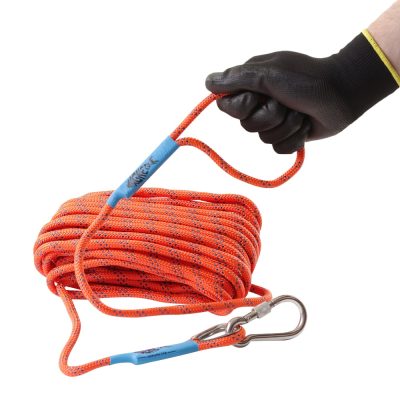
- Inspect your equipment: Check the rope, knots, carabiner, eye bolt, and magnet before you start.
- Secure the rope first: Attach the free end to a reliable anchor point before throwing the magnet. Never tie it to your body.
- Wear gloves: Use protective gloves with grip whenever you handle wet rope or recovered metal.
- Control the throwing area: Make sure nobody is behind you or close to the rope.
- Work with another adult: A second person can keep the area clear and call for assistance.
- Watch the weather: Stop during thunderstorms, high winds, flooding, or poor visibility.
- Lift within your ability: Do not risk a fall or injury to recover an object that is too heavy.
- Clean up responsibly: Do not leave recovered scrap, rope, packaging, or mud-covered objects beside the water.
Beginners can find matched equipment on the Magnetar magnet fishing kits page. A complete kit can help ensure that the magnet, rope, gloves, and other accessories are suitable for use together.
-
Rated 5.00 out of 5Add to cart
$ 94.99Original price was: $ 94.99.$ 84.99Current price is: $ 84.99. -
Rated 4.86 out of 5Get notified
$ 189.99Original price was: $ 189.99.$ 169.99Current price is: $ 169.99. -
Rated 4.92 out of 5$ 5.99 – $ 35.99Price range: $ 5.99 through $ 35.99Select options This product has multiple variants. The options may be chosen on the product page
-
 Rated 5.00 out of 5$ 22.99 – $ 34.99Price range: $ 22.99 through $ 34.99Select options This product has multiple variants. The options may be chosen on the product page


Can strong fishing magnets affect pacemakers or implants?
Strong magnets can interfere with some pacemakers, implanted defibrillators, programmable shunts, and other medical devices. A person with an implanted medical device should not rely on general magnet-handling advice alone.
Ask your physician or the device manufacturer what distance must be maintained and whether handling a powerful fishing magnet is appropriate. Keep the magnet securely stored and make sure it cannot swing or snap toward the chest or implant area.
This precaution also applies to people standing nearby, not only to the person holding the magnet.
Is magnet fishing safe for children?
Children can participate when a responsible adult supervises the entire activity and chooses a manageable magnet. The adult should select the location, secure the rope, control the throwing area, and handle unfamiliar or heavy finds.
Children should wear gloves and stay away from the water’s edge. They should be taught not to touch ammunition, weapons, sealed containers, sharp metal, or any object they cannot identify.
Check the location before you cast
Permission and recovery rules can vary according to the state, municipality, landowner, park authority, water-management agency, or protected status of a site. Public access to a bank does not automatically mean that removing objects from the water is permitted.
Check the rules for the exact location and obtain the landowner’s permission on private property. Avoid environmentally sensitive, archaeological, military, industrial, and restricted areas unless the responsible authority has clearly allowed the activity.
With a suitable location, reliable equipment, protective gloves, and a clear emergency plan, magnet fishing can remain an enjoyable and responsible outdoor hobby. Explore Magnetar’s fishing magnets and choose equipment that matches your experience and physical ability.
Frequently Asked Questions
Is magnet fishing dangerous?
Magnet fishing is generally safe when you use reliable equipment, wear gloves, choose a stable location, and handle finds responsibly. The main avoidable risks include cuts, pinched fingers, falls, unsafe lifting, and touching suspicious objects.
What should I do if I find an explosive while magnet fishing?
Do not touch, move, clean, or transport the object. Keep other people away, move to a safe location, call 911, and follow the instructions of emergency services.
What should I do with a firearm found in the water?
Do not operate, clean, or take the firearm home. Keep the area clear and contact local law enforcement, using 911 when there is an immediate danger and the department’s non-emergency number in other circumstances.
Can children go magnet fishing safely?
Children can participate under continuous adult supervision with a manageable magnet, gloves, and a safe position away from the water’s edge. An adult should control the equipment and deal with every heavy, sharp, or unfamiliar find.
What equipment do I need for safe magnet fishing?
You need a suitable fishing magnet, a compatible strong rope, protective gloves, secure attachment hardware, and safe storage for transport. Inspect every component before use and replace damaged rope or hardware immediately.